




1. Download Pi OS to your SD card or SSD by Raspberry Pi Imager tool.
2. In the Pi OS configuration graphical interface, enable I2C and serial port, and disable the serial monitor function.
3. By default, the /dev/ttyAMA0 serial port is enabled, but you need to edit the file to enable the /dev/ttyAMA2 serial port.
Run the command:
sudo nano /boot/firmware/config.txt
Add the following lines:
dtoverlay=uart3
Save the file and exit.
The serial port mappings are as follows:
4. When you first open Node RED and import a Node flow, you will be automatically prompted to install the required plugins. Click "OK" to install all the plugins automatically.
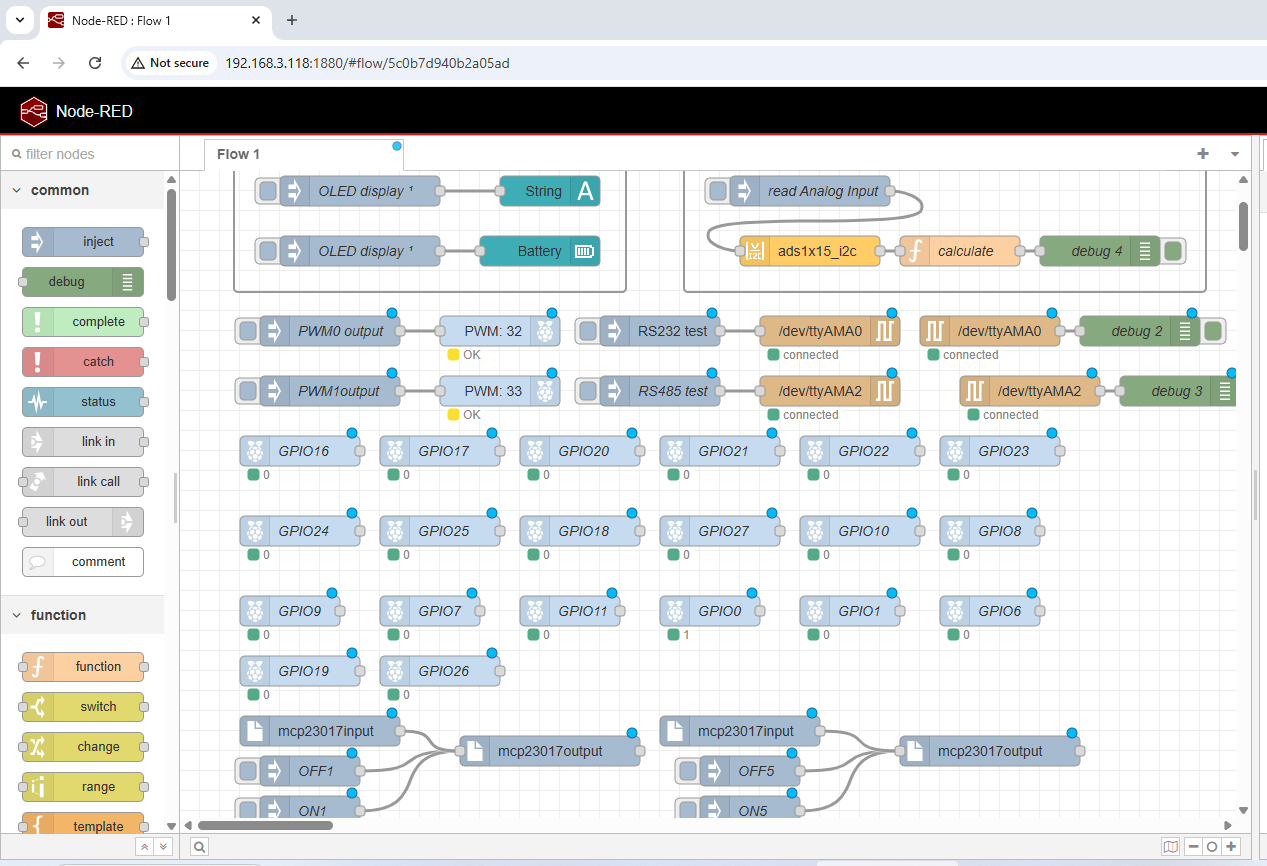
here is node red flow use for import.
 flows.zip (Size: 4.32 KB / Downloads: 8)
2. In the Pi OS configuration graphical interface, enable I2C and serial port, and disable the serial monitor function.
3. By default, the /dev/ttyAMA0 serial port is enabled, but you need to edit the file to enable the /dev/ttyAMA2 serial port.
Run the command:
sudo nano /boot/firmware/config.txt
Add the following lines:
dtoverlay=uart3
Save the file and exit.
The serial port mappings are as follows:
Code:
Serial Port    Device File    Physical Pins (Board)    BCM Pins (GPIO)

UART2    /dev/ttyAMA1    Pin 27 (TXD) / 28 (RXD)    GPIO 0 / 1

UART3    /dev/ttyAMA2    Pin 13 (TXD) / 14 (RXD)    GPIO 4 / 5

UART4    /dev/ttyAMA3    Pin 7 (TXD) / 21 (RXD)    GPIO 8 / 9

UART5    /dev/ttyAMA4    Pin 29 (TXD) / 30 (RXD)    GPIO 12 / 13
4. When you first open Node RED and import a Node flow, you will be automatically prompted to install the required plugins. Click "OK" to install all the plugins automatically.
here is node red flow use for import.
flows.zip (Size: 4.32 KB / Downloads: 8)
YouTube: https://www.youtube.com/c/KinCony
Online Store: https://shop.kincony.com
Alibaba Store: https://kincony.en.alibaba.com/
Online Store: https://shop.kincony.com
Alibaba Store: https://kincony.en.alibaba.com/